
Best Character.AI Alternatives: Apps to Talk to Real People in 2026
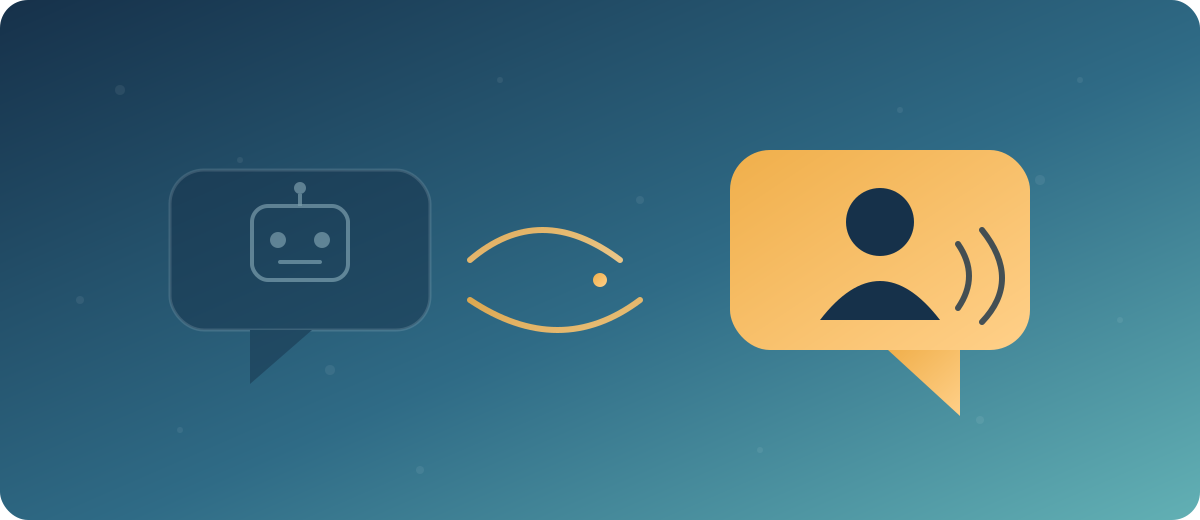
A lot of people end up on Character.AI the same way: a quiet evening, a character that feels easy to talk to, and a chat that runs longer than expected. The bot plays along, stays in character, and never makes you feel awkward. For roleplay, for blowing off steam, for company on a flat night, it does a job. Then a thought tends to surface that the app cannot answer: there is nobody on the other side who actually chose to be there.
If you are looking for something with a person in it, this guide is for you. We will cover why companion bots pull people in, what they cannot give you no matter how polished they get, the safety facts that have made headlines, and the best apps for finding the human version of that same low-pressure company. Character.AI is still running, and this guide simply points you toward apps with real people in them.
Why people use Character.AI and companion bots
Start with some honesty: the appeal makes complete sense. A bot is available at 3am on a Tuesday when everyone you know is asleep. It never judges you and never gets bored, so you can say the embarrassing thing or repeat the thing you have already said four times this week, and nothing bad happens. There is zero social risk. You can build an elaborate roleplay, test out a version of yourself, or just have something answer back when the room is too quiet.
For anyone whose recent experience of human conversation has been exhaustion or rejection, that is a real refuge. Loneliness hurts, and a companion bot is the snack within reach when the kitchen feels impossibly far. None of that is foolish or shameful. The question this article cares about is what to do when the snack stops filling you up, because for a lot of people it eventually does.
What an AI companion cannot give you
Connection has two halves. Being heard is one, and a good model fakes that half convincingly. The other half is being known: a listener who pushes back when you are spiraling, who remembers your sister's surgery because they care rather than because it sits in a database. A bot cannot choose you, because it cannot choose anything. The warmth in its replies comes from an optimization process whose job is keeping you in the app, so the comfort is scripted even when it feels spontaneous. That can soothe a rough hour, and it still leaves you alone in the room when you close the tab.
No real person is choosing your company on the other end. That is the line a roleplay cannot cross, however immersive the character gets. We dug into this gap properly in our piece on AI versus human connection, which is worth a read if the hollowness after a long chat sounds familiar.
The safety facts you should know
Millions of people use companion apps without harm, and Character.AI is one of the most popular of them. The honest picture also includes some serious developments that anyone choosing how to use these tools should know, especially parents and younger users.
In October 2025 Character.AI announced it would bar users under 18 from open-ended chats with its chatbots, with the change taking effect around November 25, 2025, and an interim two-hour daily limit for teens in the meantime. The company framed it as a response to concern about how the bots affect minors.
That change followed wrongful-death lawsuits, including the case of 14-year-old Sewell Setzer III, and mounting regulatory scrutiny. In September 2025 the US Federal Trade Commission opened an inquiry into AI chatbots acting as companions, examining several companies including Character.AI and paying particular attention to effects on children and teens. In January 2026, Google and Character.AI agreed to settle lawsuits over teen suicides linked to the chatbots.
The open questions here are about the category and its effect on minors, and clear answers are still arriving. One thing is not in question: an AI companion is not a substitute for professional support. If you or someone you know is struggling with thoughts of self-harm, please reach out to a person who can help. In the US, you can call or text 988 to reach the Suicide and Crisis Lifeline, free and available around the clock.
Best apps to talk to real people instead
Different apps replace different parts of the companion-bot experience, so each entry below notes which part it covers, along with the honest catch. App names stay plain text on purpose. Apps in this space change often, so check current reviews and the moderation policy before you lean on any of them.
- Bubblic. Voice-first conversations with real people around the world, with no photos and no profile to build. You press a button and talk, which makes it the closest human equivalent of the judgment-free company a bot offers: the other person cannot see you and knows nothing about your life, yet still chose to show up. The trade is that real voices come with real unpredictability, which turns out to be the part you were missing. Free, on iOS and Android.
- Wakie. Topic-based voice calls with strangers. You post what you want to talk about, and someone who finds the topic interesting calls you for a one-off conversation. Good for replacing the way you used to open the bot with one specific thing on your mind. Who answers varies a lot, so some calls land well and others you will end early.
- 7 Cups. Trained volunteer listeners you reach anonymously under a handle. The free listening side does exactly the job many people gave their bot: being heard on a hard day without judgment or unwanted advice. Listener quality varies since these are volunteers, so move on if the first one is a poor fit.
- Slowly. Pen-pal letters that take hours or days to arrive depending on the distance between you. The person on the other end actually remembers your last letter and writes back because they want to. Beautifully low pressure, and not built for tonight, so treat it as a slow burn rather than instant company.
- TalkLife. A peer-support community feed where you post what you are going through and people who have been there respond. Closer to a noticeboard than a live chat, which suits slow ongoing support more than late-night company. Free, with optional paid extras.
- Reddit and Discord. Pseudonymous interest communities where your handle becomes familiar over time and people notice when you have been gone, all without anyone needing your real name. Moderation varies a lot by community, so pick active, well-moderated ones.
You may be tempted to swap one bot for another, like Replika or Pi, and if a bot genuinely helps you through a hard hour that is your call to make. For anyone who is vulnerable or looking for real connection, though, the better move is a person, and the apps above all put one on the other end. Our roundup of the best Replika alternatives covers the same ground for that app.
Easing the jump from bot to human
The anxiety about switching is real, so take it seriously rather than waving it off. A bot replies in two seconds, always agreeably and always in character. A human might pause before answering, or misunderstand you on the first try, and your nervous system notices. If you expect your first human conversation to feel as frictionless as the bot did, you will quit after one awkward call.
So stack the deck instead. Start anonymous, with nothing attached to your real name, and choose voice without video: warm enough to feel like company, while you stay invisible. Keep early chats short on purpose, since a good ten minutes beats a draining hour. And remember the thing the anxiety hides from you: the other person also wanted to talk, which is why they opened the app at all. Our guide to apps to talk to strangers safely covers how to do this without putting yourself at risk, and if the fear runs deeper than first-call nerves, how to overcome the fear of talking to people breaks it into smaller steps.
Where Bubblic fits
We built Bubblic for almost exactly this gap. Everything that made the bot easy stays: no profile to build, no photos, no judgment, and it is there whenever the quiet hits. The script goes, and a real person's voice replaces it. You press a button and get connected to someone somewhere in the world who also wanted to talk, and whatever they say back comes from an actual human deciding to be kind to you. The pressure stays low, and it is free.
The first call is the strange one, and most people are surprised by how fast the strangeness fades. After months of being agreed with by a character, an honest and slightly imperfect human reply can feel like the first proper meal after a long stretch of snacks.
Talk to someone real
You already learned the hard part with the bot: talking helps. Now get the version where someone actually hears you.
FAQ
Is there a Character.AI alternative with real people?
Yes. Bubblic is the closest match: voice conversations with real people around the world, with no profile and no photos, free on iOS and Android, so it keeps the low-pressure feel while replacing the bot with a person. Wakie offers topic-based voice calls, 7 Cups connects you with trained volunteer listeners, Slowly offers slow pen-pal letters, and TalkLife plus pseudonymous communities like Reddit and Discord cover ongoing peer support. Check current reviews and moderation policies, since apps in this space change often.
Did Character.AI shut down?
No. Character.AI is still operational. In October 2025 it announced it would bar users under 18 from open-ended chats with its chatbots, with the change taking effect around November 25, 2025, and an interim two-hour daily limit for teens. The move followed wrongful-death lawsuits and an FTC inquiry into companion chatbots, and in January 2026 Google and Character.AI agreed to settle lawsuits over teen suicides linked to the chatbots. The app remains available, but these are facts worth knowing before relying on it.
Is it safe for teens to use AI companion chatbots?
That is exactly the open question regulators and companies are wrestling with. Character.AI now restricts open-ended chats for users under 18, the FTC has opened an inquiry into companion chatbots with attention to children and teens, and lawsuits over teen suicides have been settled. An AI companion is not a substitute for professional support. If you or someone you know is struggling, in the US you can call or text 988 to reach the Suicide and Crisis Lifeline.
Isn't talking to a real stranger harder than talking to a bot?
At first, yes. A person can pause or disagree, and a bot never will. That effort is also where the value lives: a kind reply costs a human something real, which is exactly what makes it land. You can soften the jump with anonymous voice formats and short early calls, and remember that the other person opened the same app because they wanted to talk too.